


Introduction to Loss Ratio
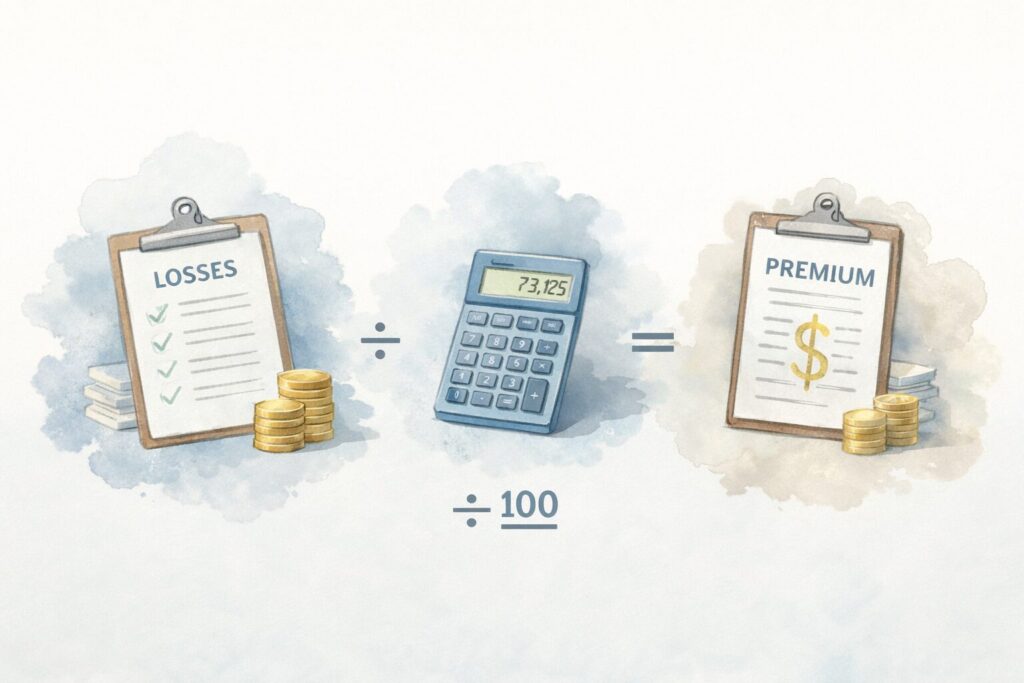
Understanding financial performance metrics distinguishes successful insurance professionals from those who struggle to spot profitable business opportunities. The loss ratio serves as one of the most vital performance indicators in insurance, directly measuring underwriting profitability and showing whether your book of business creates profit or generates losses.
Definition of Loss Ratio
The loss ratio shows the relationship between incurred losses and earned premium, expressed as a percentage. This metric reveals how much an insurer pays in claims and related expenses for every dollar collected in premium. A 65% loss ratio means that for every $100 in earned premium, the insurer pays $65 in losses and loss adjustment expenses.
Unlike broader profitability metrics, the loss ratio focuses on underwriting performance alone, excluding investment income and operating expenses. This targeted measurement allows underwriters, agents, and risk managers to assess pure insurance risk without interference from other business activities.
Importance of Loss Ratio in Business
The insurance loss ratio fulfills multiple strategic functions within carrier operations and agency management:
- Underwriters depend on loss ratios to assess pricing adequacy, spot problematic accounts, and make informed retention decisions.
- When your commercial insurance loss ratio surpasses 80%, you’re entering unprofitable territory that demands immediate attention—repricing, enhanced risk management, or non-renewal.
- Carriers use loss ratios to evaluate producer performance, allocate capacity, and determine profit-sharing arrangements.
- Agencies tracking their book’s loss ratio can negotiate better commission structures, secure expanded authority, and prevent unwanted market exits.
- For brokers, understanding client loss ratios enables proactive risk management conversations that reduce claims frequency and preserve favorable pricing at renewal.
The medical loss ratio carries particular significance for health insurance carriers, mandated by the Affordable Care Act to spend at least 80% (individual/small group) or 85% (large group) of premium revenue on medical claims and quality improvement activities. Failing to meet this minimum loss ratio threshold triggers rebate requirements to policyholders.
The Loss Ratio Formula
Calculating loss ratios demands precision and consistency. Using incorrect data sources or inconsistent time periods produces misleading results that distort underwriting decisions.
Breakdown of the Loss Ratio Formula
The standard loss ratio formula is:
Loss Ratio = (Incurred Losses + Loss Adjustment Expenses) ÷ Earned Premium × 100
Each component demands careful definition to ensure accurate calculation and meaningful comparison across time periods or between books of business.
Components of the Formula
- Incurred Losses: Include all claim payments made during the measurement period plus reserves established for reported claims not yet settled and estimates for claims incurred but not reported (IBNR). This accrual basis captures the complete economic impact of losses occurring during the evaluated period, regardless of payment timing.
- Loss Adjustment Expenses: Encompass all costs directly associated with investigating, defending, and settling claims. These divide into two categories:
- Defense and Cost Containment (DCC): Attorney fees, expert witness costs, court fees, and investigation expenses
- Adjusting and Other (A&O): Claim adjuster salaries, claims system costs, and internal administrative expenses
Some professionals calculate a pure loss ratio (incurred losses ÷ earned premium) that excludes loss adjustment expenses, providing a cleaner view of actual claim severity separate from claims handling efficiency. The pure loss ratio proves particularly useful when comparing performance across carriers with different operational structures.
3. Earned Premium: Represents the portion of written premium that applies to the measurement period. A 12-month policy with a $12,000 annual premium earns $1,000 per month. Using earned premium—rather than written premium—matches revenue recognition to the exposure period when losses occurred, providing an accurate comparison.
Understanding Premiums and Claims
The distinction between written premium and earned premium creates confusion for many professionals new to loss analysis:
- Written premium refers to the total premium amount for all policies written during a period, regardless of policy effective dates or coverage periods.
- Earned premium recognizes only the portion of premium that corresponds to expired exposure.
Consider a policy written December 15, 2023, with a $24,000 annual premium and December 15, 2024 expiration. For calendar year 2023, the written premium is $24,000, but earned premium is only $1,032 (16 days of coverage). This timing difference significantly impacts loss ratio calculation.
Insurance claims paid represents cash actually disbursed during a period, while incurred claims includes both payments and reserve changes. A sophisticated loss ratio calculation always uses incurred claims to capture the full loss experience, including developing claims that will require future payments.
How to Calculate Loss Ratio: A Step-by-Step Process
Walking through a systematic calculation process ensures accuracy and consistency. Professional actuaries and underwriters follow these specific steps.
Gathering Necessary Data
Start by establishing clear parameters for your loss ratio calculation:
- Define the evaluation period: Calendar year, policy year, accident year, or custom date range
- Identify the book of business: Entire portfolio, specific line of business, producer, or individual account
- Determine valuation date: Losses valued as of what date (accounting close, current date, etc.)
- Specify loss basis: Paid losses, case incurred, or incurred including IBNR
Extract data from consistent sources—preferably your policy administration system for premium data and claims management system for loss data. Mixing data sources introduces timing mismatches and reconciliation issues.
Premiums Earned
Calculate total earned premiums for your defined period. Most policy administration systems generate earned premium reports by coverage period. Verify that:
- Premium includes all endorsements and audits processed through the valuation date
- Return premium from cancelled policies reduces earned premium appropriately
- Premium basis matches your loss basis (same business units, same period definition)
For a calendar year 2023 loss ratio calculation, you need all premium earned during January 1 through December 31, 2023, regardless of when policies were originally written.
Claims Incurred
Extract claims incurred data matching your premium period and loss basis selection. Key data points include:
- Paid losses
- Case reserves (for reported claims)
- IBNR reserves (for unreported claims)
- Loss adjustment expense reserves
- Salvage and subrogation recoveries (if included in your calculation methodology)
Total incurred losses equal paid losses plus outstanding reserves. Many professionals subtract recoveries from incurred losses to calculate a net loss ratio reflecting actual claim costs after recovery efforts.
Applying the Loss Ratio Formula
With complete data assembled, calculate your loss ratio:
Example Calculation:
- Incurred Losses: $487,500
- Loss Adjustment Expenses: $73,125
- Total Earned Premiums: $750,000
Loss Ratio = ($487,500 + $73,125) ÷ $750,000 × 100 = 74.75%
This 74.75% loss ratio indicates the insurer paid approximately 75 cents in losses and loss adjustment expenses for every premium dollar earned—a profitable result assuming expense ratios and other costs remain reasonable.
How to Calculate Loss Ratio for Insurance
Insurance loss ratios require special considerations beyond basic ratio mathematics.
Unique Considerations in the Insurance Industry
Different insurance lines exhibit dramatically different expected loss ratios:
- Workers compensation historically targets 65-70% loss ratios
- Commercial auto runs 70-75%
- General liability operates at 60-65%
- Property coverage aims for 55-60%
These targets reflect differing expense structures, loss adjustment expense ratios, and market conditions.
The medical loss calculation for health insurance carriers follows a specialized formula mandated by federal regulation:
MLR Formula = (Claims Paid + Quality Improvement Activities) ÷ (Premium Revenue – Taxes and Regulatory Fees) × 100
The MLR formula includes quality improvement spending not captured in traditional loss ratios and adjusts premium revenue for certain excluded items. Health insurance carriers calculating their medical loss incorrectly face regulatory penalties and rebate obligations.
Long-tail lines like professional liability or products liability require IBNR reserves that won’t fully develop for years. A professional liability policy written in 2023 might generate claims reported in 2027 or later. This extended development period makes early loss ratio measurements unreliable and requires patience before drawing conclusions about underwriting performance.
Example Calculation in Insurance
A regional property and casualty insurer writes commercial package policies and seeks to evaluate 2023 underwriting results:
Data Extracted (Calendar Year 2023, Valued as of December 31, 2023):
- Earned Premium: $15,750,000
- Paid Losses: $8,250,000
- Case Reserves: $2,100,000
- IBNR Reserves: $975,000
- Defense and Cost Containment Expenses: $1,125,000
- Adjusting and Other Expenses: $562,500
Calculation:
Total Incurred Losses = $8,250,000 + $2,100,000 + $975,000 = $11,325,000 Total Loss Adjustment Expense = $1,125,000 + $562,500 = $1,687,500 Loss Ratio = ($11,325,000 + $1,687,500) ÷ $15,750,000 × 100 = 82.62%
This 82.62% loss ratio signals underwriting challenges. Combined with typical expense ratios of 25-30%, the insurer likely operates near breakeven or at a loss before considering investment income.
How to Calculate Win/Loss Ratio
The win/loss ratio serves different purposes than insurance loss ratios but appears in insurance contexts around new business production.
Differentiating Win/Loss and Loss Ratios
A win/loss ratio measures sales effectiveness by comparing successful proposal outcomes to unsuccessful ones. This metric applies to agency new business efforts, carrier underwriter decision-making, and marketing campaign performance.
The loss ratio quantifies underwriting profitability through the relationship between losses and premium. These metrics measure fundamentally different aspects of insurance operations—sales effectiveness versus risk selection accuracy.
Confusion between these terms occasionally occurs in agency settings where “wins” and “losses” might colloquially describe profitable versus unprofitable accounts. Maintain precise terminology to avoid miscommunication.
Calculation Steps for Win/Loss Ratio
Calculate the win/loss ratio as:
Win/Loss Ratio = Number of Wins ÷ Number of Losses
A commercial lines agency quoted 240 new business opportunities in 2023, binding 60 accounts and losing 180 to competitors or no-quotes. How to calculate win/loss ratio produces:
Win/Loss Ratio = 60 ÷ 180 = 0.33 or 33%
This 33% success rate (sometimes expressed as a win percentage rather than a ratio) provides baseline performance for evaluating marketing strategy, pricing competitiveness, and producer effectiveness.
Common Mistakes in Calculating Loss Ratios
Loss ratio calculations appear deceptively simple but contain numerous opportunities for error that distort results and mislead decision-makers.
Misinterpreting the Data
The most frequent mistake involves comparing loss ratios calculated on different bases. Mixing a paid loss ratio with an incurred loss ratio, or comparing a loss ratio including loss adjustment expense against one excluding it, produces meaningless comparisons.
Many professionals mistakenly evaluate immature loss ratios for long-tail business. A general liability policy six months old shows artificially low loss ratios because most losses haven’t been reported yet. Reserving actuaries understand that current loss ratios for recent policy periods remain highly uncertain and will develop significantly over time.
Another common error treats the loss ratio as a complete profitability measure. A 60% loss ratio doesn’t guarantee profitability—you must account for commissions, premium taxes, underwriting expenses, and corporate overhead. The combined ratio (loss ratio + expense ratio) provides a more complete view of underwriting profit.
Using Inaccurate Figures
Data quality issues frequently undermine loss ratio accuracy:
- Stale reserve data: Using reserves from months-old valuations rather than current estimates
- Incomplete premium: Missing audit adjustments or unprocessed endorsements
- Misallocated losses: Claims charged to wrong policies or time periods
- Inconsistent treatment: Including loss adjustment expense in one period but excluding it in another
Establish standardized data extraction procedures with documented calculation methodologies. Professional actuaries maintain detailed documentation of every assumption, data source, and calculation step—a practice all insurance professionals should adopt when performing loss analysis.
Conclusion
Recap of Key Points
The loss ratio formula—(Incurred Losses + Loss Adjustment Expenses) ÷ Earned Premium—provides essential insight into underwriting performance across all insurance sectors. Calculating loss ratios accurately requires understanding the distinction between written and earned premium, using incurred rather than paid losses, and maintaining consistency in data sources and methodologies.
Remember that what is a loss ratio depends on context—a profitable loss ratio for workers compensation differs significantly from property insurance expectations. The minimum loss ratio concept applies primarily to health insurance through MLR requirements but provides useful benchmarking for any line of business.
Professional loss ratio analysis extends beyond simple calculation to thoughtful interpretation considering line of business characteristics, policy maturity, reserve adequacy, and market conditions.
Next Steps for Applying Loss Ratios
Begin monitoring loss ratios systematically across your book of business:
- Underwriters should track account-level loss ratios quarterly, flagging any accounts exceeding 70% for review.
- Agencies should request loss ratio data from carriers monthly, identifying profitable and unprofitable relationships that inform placement strategy.
- Develop loss ratio targets by line of business and producer.
- Commission structures should reward producers maintaining favorable loss ratios rather than purely volume-based arrangements.
- Risk management conversations with insureds become more productive when grounded in specific loss ratio data showing financial impact of claims.
Master the loss ratio calculation and you gain a powerful tool for evaluating risk, guiding underwriting decisions, and building more profitable insurance relationships. This fundamental metric separates professional insurance practitioners from order-takers—use it consistently and watch your underwriting results improve.
Frequently Asked Questions
Insurers should use earned premium when evaluating profitability for a specific period (matching losses to the exposure that actually occurred) and written premium when assessing current underwriting/pricing performance or growth on business recently written.
The pure loss ratio is calculated as incurred losses divided by earned premium, usually expressed as a percentage.
The standard loss ratio formula is (Incurred Losses + Loss Adjustment Expenses) ÷ Earned Premium, expressed as a percentage.
- Insurers should rely on earned-premium loss ratios for financial/actuarial performance analysis of past periods and on written-premium loss ratios to monitor how newly written or in-force business is performing relative to current pricing and underwriting.